How Desert Conditions Quietly Affect Homes Over Time
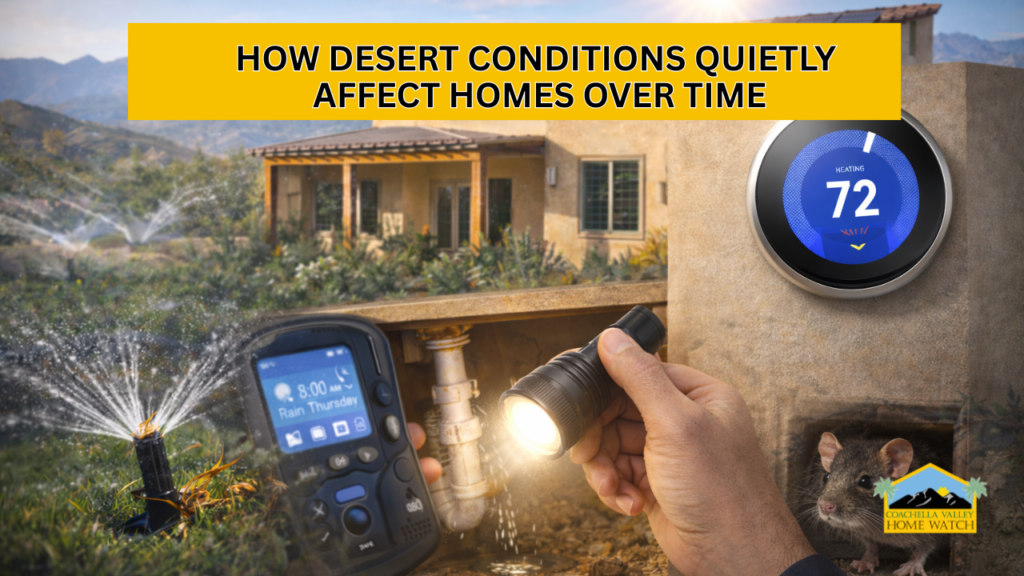
Desert homes are designed to look strong and low maintenance. Thick walls, tile floors, and clean lines give the impression that they can withstand anything the environment throws at them. But over time, desert conditions quietly affect homes in ways most homeowners don’t notice until problems become expensive.

The challenge isn’t dramatic weather events. It’s slow, subtle change.


Temperature Swings and Material Stress

One of the defining features of desert climates is extreme temperature fluctuation. Warm days followed by cool nights cause building materials to expand and contract repeatedly. Over time, this movement can loosen seals, stress joints, and create small gaps around doors and windows.

These changes rarely feel urgent, but they gradually reduce a home’s ability to regulate indoor conditions. Small air leaks can lead to uneven temperatures and increased strain on HVAC systems.


Dry Air, Limited Circulation, and Indoor Balance

Low humidity doesn’t mean indoor air stays fresh. In vacant or lightly used homes, airflow often drops significantly. Without regular circulation, stale air can settle into closed rooms, closets, and storage spaces.

According to the U.S. Environmental Protection Agency, indoor air quality issues often develop when ventilation is limited, even in dry climates.

Many homeowners describe a home feeling “off” before any visible damage appears. That feeling is often the first sign that something has shifted.


HVAC Systems Under Quiet Pressure

Desert HVAC systems work harder than most homeowners realize. Even when a home is unoccupied, cooling and heating systems cycle to maintain baseline temperatures.

Dust buildup, clogged filters, and small mechanical changes can reduce efficiency long before a system fails. The U.S. Department of Energy notes that HVAC systems benefit from regular monitoring to prevent unnecessary strain and premature breakdowns.

Without consistent oversight, these gradual changes often go unnoticed until the system struggles during peak conditions.


Irrigation and Ground-Level Impact

Exterior systems continue to operate even when homes sit empty. Irrigation timers may run year-round, and small leaks can persist unnoticed, especially during cooler months when evaporation slows.

Local water authorities emphasize that irrigation inefficiencies often go undetected without regular checks.

Over time, excess moisture can affect landscaping, soil stability, and hardscaping. These issues tend to develop quietly below the surface.

For homeowners away for extended periods, exterior monitoring is especially important.


Pests and Undisturbed Spaces

Quiet homes attract attention. Rodents and insects are drawn to undisturbed environments that offer warmth and shelter. Entry points that seem insignificant can become access routes over time.

Early signs of pest activity are often subtle and easy to miss without regular walkthroughs. Once pests establish themselves, damage can escalate quickly.


Sun Exposure and Exterior Wear

Constant sun exposure accelerates wear on exterior materials. UV radiation fades finishes, weakens seals, and contributes to long-term degradation of roofing and exterior surfaces.

Because this wear happens gradually, it’s often dismissed as normal aging until repairs become unavoidable.


Why Consistent Oversight Matters

What makes desert-related home issues difficult isn’t severity. It’s silence.

Most problems don’t announce themselves. They develop slowly, out of sight, and without immediate disruption. That’s why consistency matters more than occasional check-ins.

Professional home watch services focus on noticing small changes over time, not reacting to emergencies after damage occurs.

Understanding how a home looks, feels, and functions from visit to visit makes it easier to catch issues early.

For many seasonal homeowners, that awareness is what provides peace of mind.


Frequently Asked Questions

Why do desert homes require ongoing monitoring?
Desert conditions create gradual wear through temperature swings, dry air, sun exposure, and system strain that often goes unnoticed without regular oversight.

Do vacant homes deteriorate faster?
Yes. Limited use means fewer opportunities to notice leaks, airflow issues, or system changes as they develop.

Is HVAC monitoring important in mild seasons?
Absolutely. Small inefficiencies often appear during moderate weather and worsen under extreme temperatures.

Can exterior issues really develop in winter?
Yes. Irrigation leaks and sun exposure continue year-round, even during cooler months.

What’s the biggest risk for seasonal homeowners?
Not sudden damage, but slow changes that compound over time without detection.

Solar-Powered Home Security in Palm Desert
Solar-Powered Home Security in Palm Desert

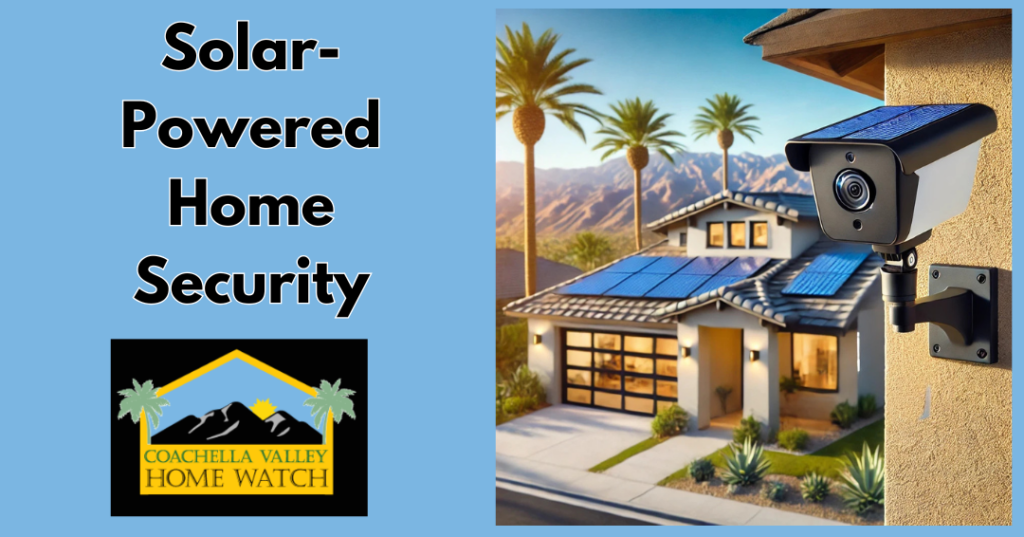
As homeowners in Palm Desert seek smarter, more sustainable ways to protect their properties, solar-powered home security systems have emerged as a top solution. With Coachella Valley’s abundant sunshine, solar security systems provide a reliable, cost-effective, and eco-friendly way to safeguard homes—especially valuable for seasonal residents and frequent travelers.

The Advantages of Solar-Powered Security Systems

1. Continuous Power, Even During Outages

Unlike traditional wired security systems that rely on grid electricity, solar-powered systems operate independently. This means that even during power outages or rolling blackouts—common in the Coachella Valley’s hot summer months—your home remains protected.

2. Lower Energy Costs and Sustainability

Solar security systems leverage renewable energy, reducing dependence on traditional power sources and lowering monthly electricity bills. Homeowners committed to sustainability benefit from reducing their carbon footprint while enjoying a secure home environment.

3. Remote Monitoring and Smart Features

Many modern solar-powered security systems integrate with smart home technology, allowing homeowners to monitor their properties remotely. Features like real-time video surveillance, motion detection, and instant alerts offer peace of mind, whether you’re in town or away.

4. Easy Installation and Minimal Maintenance

Traditional security systems often require extensive wiring and professional installation, which can be costly. Solar-powered security systems are wireless, making installation straightforward. With minimal moving parts and self-sustaining power, maintenance requirements are significantly lower.

Real-World Success Stories: Solar Security in Palm Desert

Case Study: Seasonal Homeowner in Palm Desert

Real-World Success Stories: Solar Security in Palm Desert

Linda T., a seasonal resident from Seattle, installed a solar-powered security system in her Palm Desert home. With remote monitoring and backup battery storage, she receives real-time updates and video footage, ensuring her property remains secure while she’s away. “I no longer worry about power outages or break-ins. My solar security system gives me peace of mind year-round,” says Linda.

Expert Insight: Louis Moreto, Coachella Valley Home Watch

According to Louis Moreto, co-owner of Coachella Valley Home Watch, “Home security is a top concern for seasonal homeowners. Solar-powered systems offer a reliable and cost-effective solution, ensuring continuous protection even when properties are vacant for months.”

Key Features to Look for in a Solar Security System

When selecting a solar-powered security system for your home, consider the following features:

  • High-Efficiency Solar Panels – Ensures maximum energy absorption for continuous operation.
  • Backup Battery Storage – Provides power during extended cloudy periods or nighttime.
  • Motion-Activated Cameras and Lights – Enhances security by detecting intruders and illuminating dark areas.
  • Cloud Storage and Remote Access – Allows you to store and access footage anytime, anywhere.
  • Weather Resistance – Designed to withstand Coachella Valley’s extreme temperatures and desert climate.

FAQs About Solar-Powered Home Security

Do solar security cameras work at night?

Yes, most solar security cameras come with rechargeable battery storage and night vision capabilities, ensuring 24/7 protection.

Are solar security systems reliable in extreme heat?

High-quality solar security systems are designed to withstand extreme temperatures, making them ideal for Coachella Valley’s hot climate.

How long do solar security cameras last?

With proper maintenance, solar security cameras can last 5-10 years, while solar panels typically have a lifespan of 20-25 years.

Can I install a solar security system myself?

Many solar security systems are designed for DIY installation. However, professional installation ensures optimal positioning and functionality.

Final Thoughts: Secure Your Home with Solar Power

Final Thoughts: Secure Your Home with Solar Power

For Palm Desert homeowners, investing in a solar-powered home security system is a smart move. It offers energy savings, uninterrupted protection, and seamless remote monitoring—ideal for both full-time residents and seasonal homeowners.

Take the Next Step with Coachella Valley Home Watch

Looking for expert guidance on home security and maintenance while you’re away? Coachella Valley Home Watch provides professional home watch services tailored to your needs. Contact us today to learn how we can help protect your property year-round.


By integrating solar-powered security into your home, you’re not just enhancing safety—you’re making a sustainable, future-proof investment. If you have any questions or want personalized recommendations, feel free to reach out! 760-205-2072