
If you own a seasonal or second home in the Coachella Valley, you already know the hardest part of leaving isn’t locking the door—it’s wondering what’s happening after you’re gone. A camera can show you a driveway. An alarm can tell you a door opened. But neither can tell you if a slow leak started under a sink, if the HVAC is struggling in the heat, or if irrigation is spraying the wrong direction and soaking a wall.
That’s where a professional Home Watch service comes in. Coachella Valley Home Watch provides physical, on-site inspections for vacant homes, with documented reporting designed to give absentee owners clear visibility and peace of mind—whether your property is in Palm Springs, Palm Desert, La Quinta, or elsewhere in the Coachella Valley.
Below is a practical, homeowner-friendly breakdown of what a Home Watch service typically checks, why those checks matter in desert conditions, and how documented reporting helps you stay in control from afar.
1) What “Home Watch” means (and what it is not)
Home Watch is a visual inspection of a home or property, looking for obvious issues and changes that could become costly if left unnoticed. The key word is “visual”—a Home Watch professional is not there to perform repairs, act as a general contractor, or replace licensed trades.
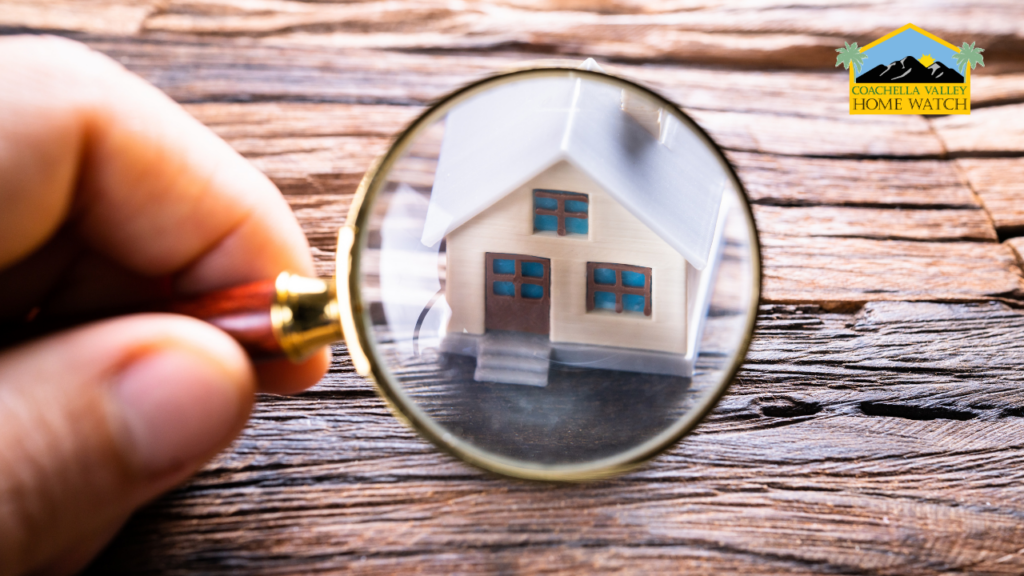
A Home Watch visit is also different from property management. Property management is often focused on tenant-related responsibilities, rent collection, leasing, and ongoing management tasks. Home Watch is designed for vacant homes—seasonal, absentee, and second-home situations—where the priority is consistent oversight and early detection.
In simple terms: Home Watch is your trusted local presence when you’re not there.
Coachella Valley Home Watch is accredited through the National Home Watch Association (NHWA), follows the NHWA Code of Ethics, and is bonded and insured. For many out-of-area owners, those standards matter as much as the checklist itself.
2) What a professional Home Watch inspection typically includes (interior + exterior)
Every home is different, and an inspection can be tailored to the property and the owner’s concerns. But most professional Home Watch visits include a combination of interior checks, exterior checks, and a general “anything changed?” scan.
Interior checks (common examples)
– Signs of water leaks or moisture: Looking under sinks, around toilets, near water heaters, and in areas where leaks often start quietly. A small drip can become major damage if it runs for weeks.
– HVAC basic condition indicators: Checking for obvious issues such as unusual thermostat readings or signs that the system isn’t maintaining expected conditions. In desert heat, HVAC problems can escalate quickly.
– Electrical and power indicators: Looking for signs of power loss or tripped breakers and checking that key systems appear to be operating normally.
– Doors, windows, and interior access points: Confirming they appear secure and unchanged.
– General interior condition: Looking for unusual odors, visible pest activity, or anything that suggests a new problem has started since the last visit.
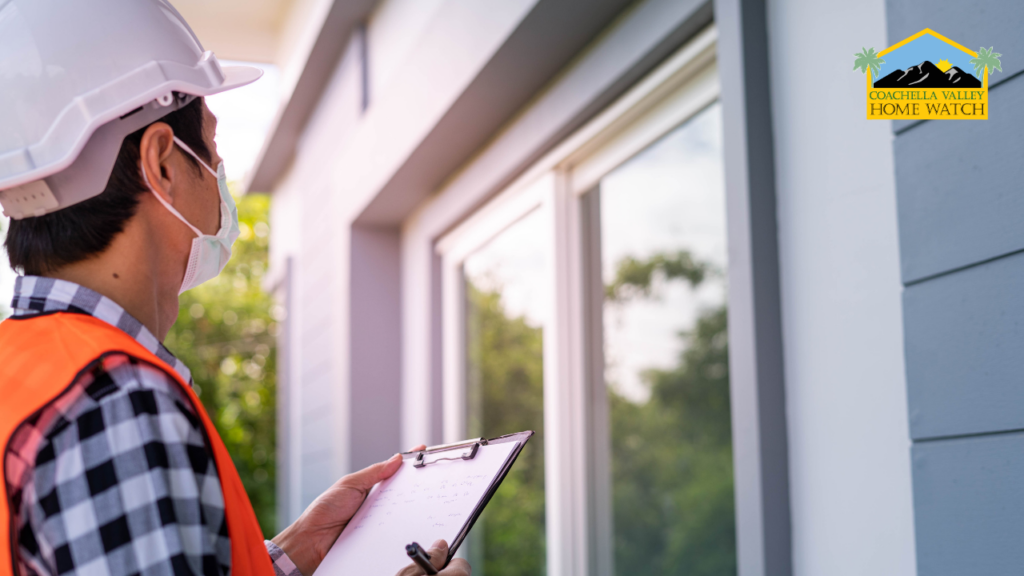
Exterior checks (common examples)
– Perimeter walk-around: Looking for signs of forced entry, damage, or changes around doors, gates, and access points.
– Roofline and visible exterior surfaces: Checking for obvious storm-related damage or anything that looks out of place.
– Irrigation and landscape indicators: Looking for broken sprinkler heads, overspray, pooling water, or dry areas that suggest a system issue.
– Signs of pests or animals: Noting activity that could indicate a developing problem.
– Overall property condition: Scanning for anything that could signal vacancy or create risk—such as unexpected debris, damage, or changes in appearance.
Why home watch service in Coachella Valley matters for seasonal owners
When a home is lived in, small issues are noticed naturally: a damp cabinet, a musty smell, a warm room, a puddle near a valve. When a home is vacant, those same issues can continue for days or weeks without anyone seeing them. A Home Watch visit is designed to shorten that “time to discovery.”
3) Common vacancy problems in desert homes (HVAC, leaks, pests, irrigation, storms)
The Coachella Valley has unique conditions that can make vacancy risk feel different than in other regions. Heat, dust, seasonal weather, and long periods of non-occupancy can combine in ways that surprise even experienced homeowners.
Here are some of the most common categories of issues that physical inspections are meant to catch early.
HVAC and heat-related problems
In desert conditions, HVAC performance is not just about comfort—it can affect the overall condition of the home. If a system fails, interior temperatures can rise quickly. A Home Watch visit can identify signs that something is off so you can address it sooner rather than later.
Plumbing leaks and water-related damage
Leaks don’t always announce themselves. A slow leak under a sink, a running toilet, or a small drip at a supply line can quietly cause damage over time. Physical checks help spot visible signs before they become a major restoration project.
Pests and unwanted activity
Vacant homes can attract pests. While no inspection can guarantee a home will never have pest activity, routine visits can help identify visible signs early—so you can respond before a small issue becomes a bigger one.
Irrigation and exterior water issues
Irrigation problems can be expensive because they can run unnoticed. Overspray against a structure, pooling water, or broken components can cause damage and waste. A Home Watch inspection can spot obvious irrigation concerns and changes in landscape condition.
Storm and wind impacts
Even when storms are brief, they can leave behind damage or debris. A physical walk-around can identify changes that a camera might not capture—especially if the issue is on a side yard, roofline area, or a location outside a camera’s view.
Security and signs of vacancy
A vacant home can look “different” over time. A Home Watch professional is trained to notice changes and irregularities that could indicate a problem—whether that’s damage, tampering, or something that simply needs attention.
4) How documented reporting works (photos, timestamps, geo-location via HomeWatchIT)
One of the biggest concerns for absentee owners—especially out-of-state owners or family managers—is accountability. You don’t just want to know that someone “stopped by.” You want clear documentation of what was checked and what was observed.
Home watch service in Coachella Valley uses HomeWatchIT to provide documented reporting that includes photos, timestamps, and geo-location. This type of reporting helps in several ways:
– Clarity: You can see what the inspector saw, rather than relying on vague summaries.
– Consistency: Reports create a record over time, making it easier to notice trends or recurring issues.
– Confidence: Documentation reduces uncertainty and helps you feel comfortable that checks are being completed as scheduled.
If an issue is found, the value of documentation becomes even more obvious. For example, if a leak is visible, a photo-based report can help you understand the situation quickly and make decisions about next steps.
5) How often to schedule checks and how to get started
There isn’t a single “perfect” schedule for every home in Palm Springs, Palm Desert, or La Quinta. The right frequency depends on your property, your systems, and your comfort level.
Factors that influence visit frequency
– Length of time away: The longer the vacancy, the more important consistent oversight becomes.
– Season and conditions: Desert heat and seasonal weather can increase risk at certain times of year.
– Complexity of the home: Pools, irrigation systems, and multiple HVAC zones can add variables.
– Risk tolerance: Some owners prefer more frequent checks for peace of mind and faster detection.
A practical way to think about it
Instead of asking, “What’s the minimum?” consider asking, “How quickly would I want to know if something went wrong?” Home Watch is about reducing the time between when a problem starts and when it’s discovered.
How to get started with home watch service in Coachella Valley
Getting started is typically straightforward:
1) Share basic property details and your travel/vacancy schedule.
2) Discuss your priorities (HVAC concerns, plumbing history, irrigation, security, etc.).
3) Set an inspection schedule that fits your needs.
4) Receive documented reports after visits, with photos, timestamps, and geo-location via HomeWatchIT.
For many seasonal and absentee owners across the Coachella Valley, the goal is simple: leave the home, and still feel connected to what’s happening on-site.
If you’re comparing options—neighbors, cameras, alarms, or a professional Home Watch service—remember that physical inspections are designed to catch the kinds of issues that technology and occasional check-ins often miss.
When you want a trusted local presence backed by professional standards, Coachella Valley Home Watch is here to help.