What Happens Between Home Visits — And Why It Matters More Than You Think
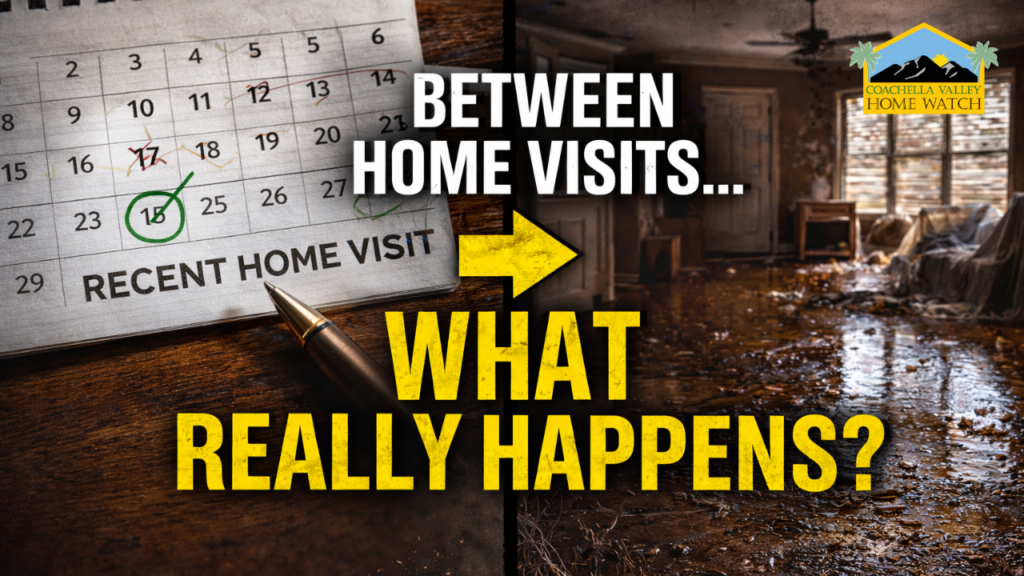
Most homeowners feel reassured once a home visit is completed.

The property was checked.
Everything looked fine.
Nothing unusual was reported.

But what many people don’t consider is what happens after the visit ends — and before the next one begins.

Because in vacant and seasonal homes, the time between visits is often when the most important changes occur.


Homes Don’t Stay Static After a Visit

A home is not a fixed environment.

Even when empty, it continues to change:

  • systems operate
  • temperatures fluctuate
  • moisture shifts
  • external conditions impact the property

A home that looked perfectly fine today can begin changing tomorrow.

According to the U.S. Department of Energy, home systems require ongoing monitoring because performance and conditions can change quickly over time.


💧 Small Issues Can Begin at Any Time

The challenge is not what’s found during a visit — it’s what starts afterward.

For example:

  • a minor leak may begin the next day
  • irrigation may shift mid-week
  • HVAC may stop cycling properly
  • pests may enter unnoticed

According to the Insurance Information Institute, many costly home issues begin as small problems that develop over time without detection.


📉 The Risk Is in the Gap

A single visit provides a snapshot.

But homes don’t operate in snapshots — they operate continuously.

That means:

  • the longer the gap between visits
  • the longer a problem can go unnoticed

This is especially important for vacant homes, where there is no daily feedback.


🔍 Why Consistency Matters More Than Frequency Alone

Some homeowners believe that “occasional checks” are enough.

But what matters is not just frequency — it’s consistency and structure.

A professional home watch schedule ensures:

  • regular intervals
  • full walkthroughs
  • comparison between visits
  • documentation of changes

This approach helps identify not just problems — but patterns over time.


🧠 The Difference Between Seeing and Understanding

A quick visit may confirm:
“Everything looks fine.”

But professional oversight looks deeper:

  • Has anything changed since the last visit?
  • Are systems behaving differently?
  • Are there early warning signs?

If you want to understand how structured visits work, this guide explains it clearly.

You can also review common questions here.


⚠️ Why the Time Between Visits Is Critical

Most damage doesn’t happen instantly.

It happens between visits.

A small issue that begins right after a visit has:

  • days or weeks to develop
  • no interruption
  • no immediate response

That’s why the goal isn’t just to check the home —
it’s to minimize the time a problem can go unnoticed.


FAQ – Home Visits & Time Gaps

1. What happens between home watch visits?

Homes continue to change, and small issues can begin without being noticed.

2. Is one visit enough to protect a home?

No. A single visit only provides a snapshot, not ongoing protection.

3. How often should visits be scheduled?

Regular, consistent intervals are recommended, especially for vacant homes.

4. What is the biggest risk between visits?

Undetected problems that have time to grow.

5. Can issues really start that quickly?

Yes, problems can begin within days after a visit.

6. Does consistency matter more than frequency?

Yes, structured and consistent visits provide better protection.

7. Why are vacant homes more vulnerable?

Because there is no daily monitoring or immediate response.

Your home may look perfect during a visit.

But what matters most is what happens after you leave.

👉 Reduce risk by minimizing the gap between inspections
👉 Schedule professional home watch services today.

Because the longer the gap, the bigger the risk.

What Happens to Your Home Insurance If Your House Is Vacant?
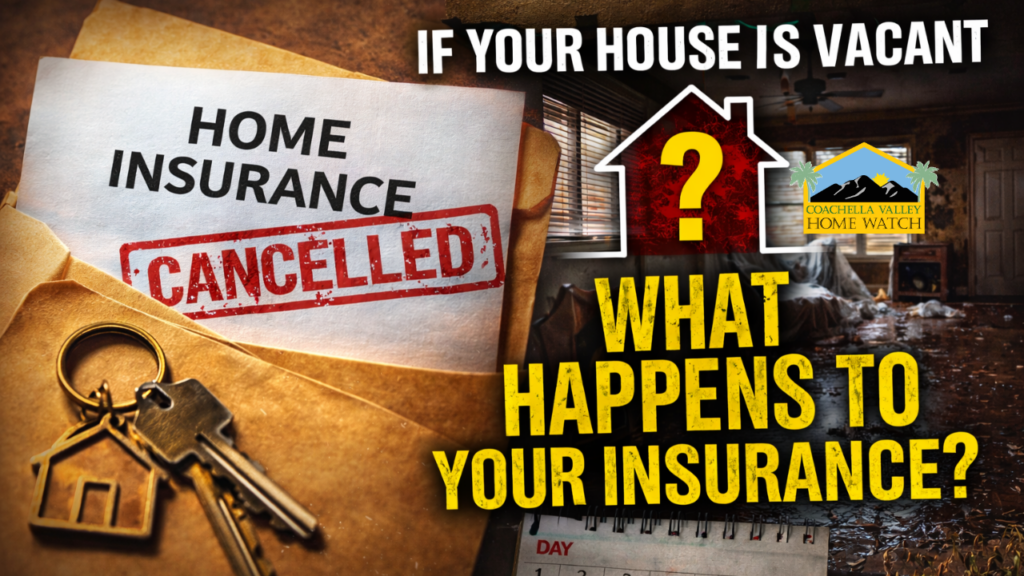
Most homeowners assume their insurance works the same way whether they’re home or away.

But once a property becomes vacant, the rules often change — and many people don’t realize it until they try to file a claim.

In some cases, coverage becomes limited.
In others, claims can be delayed… or even denied.

Understanding how vacancy affects your home insurance is critical if you plan to leave your property unattended for weeks or months.


⚠️ Insurance Companies View Vacant Homes as Higher Risk

When a home is occupied, issues are usually noticed quickly.

But when it’s vacant:

  • leaks go undetected
  • break-ins may take time to discover
  • systems fail without intervention
  • damage has time to spread

Because of this, insurers classify vacant homes as higher risk properties.

According to the Insurance Information Institute, vacant homes are significantly more vulnerable to loss due to delayed response.


📅 Vacancy Clauses: The 30–60 Day Rule

Many standard home insurance policies include a vacancy clause.

This typically means:

  • after 30–60 days of vacancy, coverage may change
  • certain types of damage may no longer be covered
  • claim conditions may become stricter

For example:

  • water damage coverage may be limited
  • vandalism may not be covered
  • claims may require proof of regular checks

Every policy is different — but the timeline is important.


💧 Claims Can Be Denied Due to “Neglect”

One of the biggest surprises homeowners face is claim denial due to lack of oversight.

If damage is considered preventable, insurers may argue:

  • the issue went on too long
  • the property wasn’t properly monitored
  • reasonable care wasn’t taken

For example:
A slow leak that continues for weeks could be classified as neglect, not a sudden event.

The Federal Emergency Management Agency highlights that early detection is key in minimizing damage and losses.


🧾 Documentation Matters More Than You Think

If a claim is filed on a vacant home, insurers may ask:

  • Was the home checked regularly?
  • How often?
  • Is there documentation?
  • Who was responsible?

Without proof, claims become harder to process.

This is where structured oversight becomes important.

Professional home watch services provide documented visits, condition reports, and consistent monitoring.

You can learn how these services work here:

And review common questions here.


🧠 The Key Difference: Assumption vs Proof

Many homeowners believe:
“I had insurance, so I’m covered.”

But insurers often look at:

  • timeline of damage
  • monitoring practices
  • response speed

Coverage is not just about having a policy —
it’s about meeting the conditions of that policy.


FAQ – Vacant Homes & Insurance

1. Does insurance cover a vacant home?

It depends on your policy. Coverage often changes after 30–60 days of vacancy.

2. What is a vacancy clause?

A condition in your policy that limits or changes coverage if the home is unoccupied.

3. Can claims be denied if the home is vacant?

Yes, especially if damage is considered preventable or due to neglect.

4. How long before insurance is affected?

Typically after 30–60 days, but it varies by policy.

5. Does checking the home help with insurance?

Yes. Regular documented checks can support claims and show proper care.

6. Are leaks covered in vacant homes?

Not always. If considered long-term damage, coverage may be denied.

7. What is the safest way to protect a vacant home?

Combine insurance with consistent property monitoring.

If your home is going to sit vacant, insurance alone may not fully protect you.

👉 Make sure your property is monitored, documented, and protected
👉 Schedule professional home watch services today:
https://coachellavalleyhomewatch.com/contact/

Because when something goes wrong, proof matters just as much as coverage.

How Long Can a Home Sit Vacant Before Problems Start?
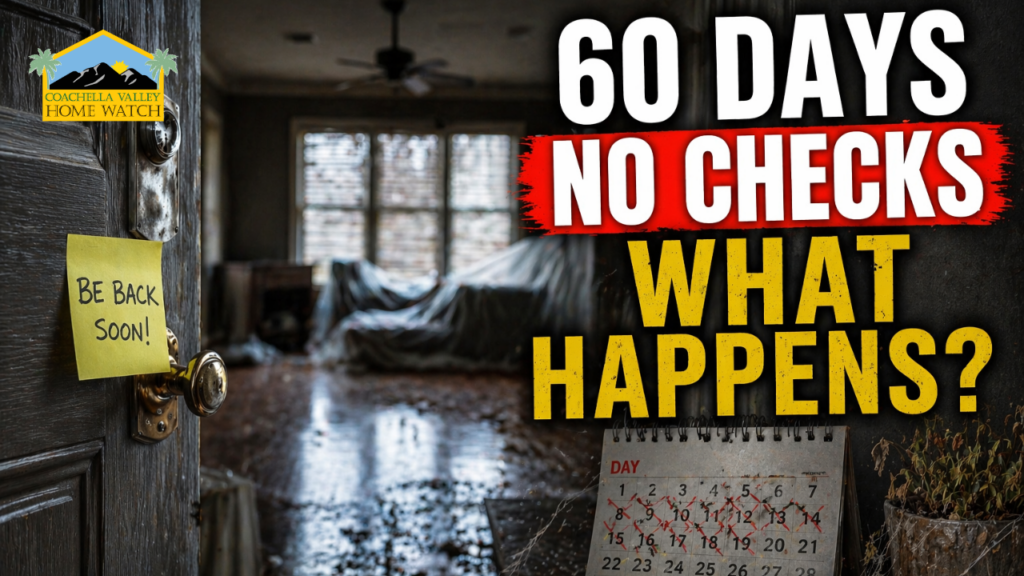
It’s one of the most common questions homeowners ask before leaving their property for an extended period:

“How long can my home sit empty before something starts to go wrong?”

The honest answer is simpler — and more concerning — than most people expect:

Problems don’t wait weeks or months.
They can start within days.


The First Few Days: Subtle Changes Begin

In the first few days of vacancy, nothing appears wrong.

But inside the home:

  • air circulation changes
  • humidity begins to shift
  • systems run without supervision

These are not visible issues — but they are the starting point.

According to the U.S. Environmental Protection Agency, indoor air conditions can change quickly when ventilation is reduced.


After 1–2 Weeks: Minor Issues Can Develop

This is when the first real risks begin to form.

Common early issues:

  • small plumbing leaks
  • irrigation misalignment
  • HVAC inefficiencies
  • pest exploration

These problems are still minor — but without anyone present, they go unnoticed.


After 30 Days: Problems Start Compounding

Once a home sits vacant for a month, small issues begin to grow.

A slow leak becomes:

  • cabinet damage
  • flooring damage
  • mold risk

An HVAC issue becomes:

  • humidity imbalance
  • system strain
  • higher failure risk

The Insurance Information Institute reports that many major home claims originate from small issues left undetected.


After 60 Days: Risk Increases Significantly

At this stage, the risk is no longer theoretical.

Common scenarios:

  • water damage spreads
  • pests settle in
  • systems begin failing
  • exterior damage worsens

Without intervention, what started as a small issue can now require thousands in repairs.

The Federal Emergency Management Agency emphasizes that early detection is key to reducing property damage.


Why Vacant Homes Are More Vulnerable

The issue isn’t just time — it’s lack of awareness.

In an occupied home:

  • you hear unusual sounds
  • you notice temperature changes
  • you see water or damage early

In a vacant home:

  • problems continue uninterrupted
  • systems operate without feedback
  • no one reacts to early warning signs

That’s what allows issues to escalate.


What Actually Prevents Problems

The key isn’t guessing how long a home is “safe.”

The key is making sure:

  • someone is checking the property regularly
  • systems are monitored
  • small issues are caught early

Professional home watch services provide structured, consistent oversight.

If you’re unsure how it works, this guide explains it clearly.

You can also review common questions here.


FAQ – Vacant Homes & Timing Risks

1. How long can a home sit vacant safely?

There is no guaranteed “safe” period — small issues can begin within days.

2. What is the biggest risk in a vacant home?

Undetected problems, especially water leaks and system failures.

3. Do problems really start that quickly?

Yes. Many issues begin subtly within the first 1–2 weeks.

4. Is 30 days too long to leave a home empty?

It depends on oversight — without monitoring, risk increases significantly.

5. Can cameras prevent these issues?

No. Cameras cannot detect most system or maintenance problems.

6. How often should a vacant home be checked?

Regular scheduled visits are recommended, especially beyond 1–2 weeks.

7. Does insurance require home checks?

Some policies include conditions for vacant homes, so monitoring is important.

If your home is going to sit empty for weeks — or even days — the question isn’t “Will something happen?”

It’s “Will anyone notice when it does?”

👉 Don’t wait until small issues turn into expensive damage
👉 Schedule professional home watch services today:
https://coachellavalleyhomewatch.com/contact/

Because the sooner a problem is noticed, the easier it is to fix.


What Home Watch Is — And What It Is Not
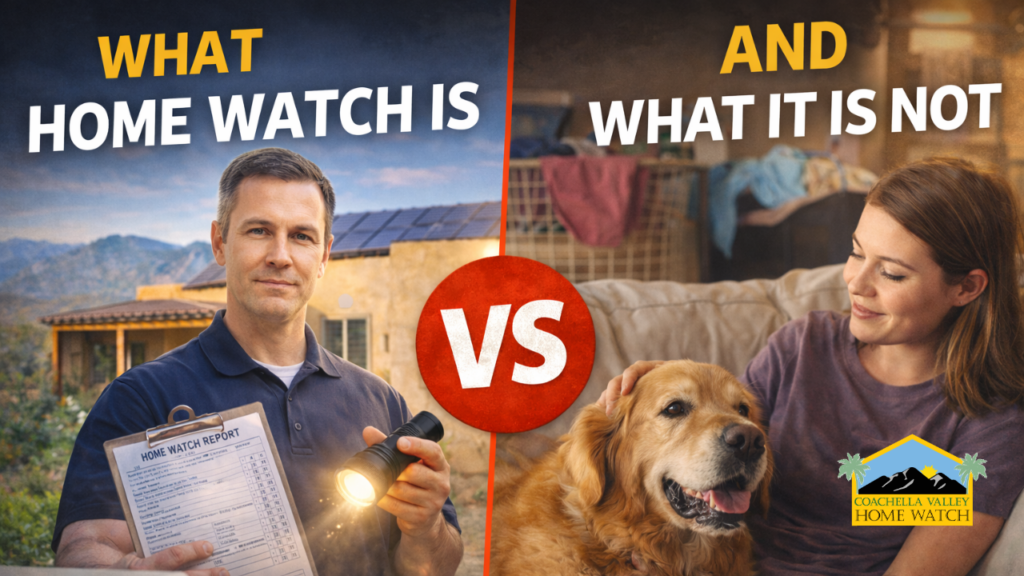
Home watch is a term many homeowners hear but don’t always fully understand. It’s often confused with property management, house sitting, or having someone “check in once in a while.” While those approaches may sound similar on the surface, they serve very different purposes.

Understanding what home watch is — and what it is not helps homeowners set realistic expectations and make better decisions about protecting their property when they’re away.


What Home Watch Is

Home watch is a structured, professional service designed to monitor the condition of a vacant or seasonal home through consistent, documented visits.

A professional home watch service focuses on:

  • observing changes inside and outside the home
  • identifying early warning signs before they escalate
  • checking systems like HVAC, plumbing, irrigation, and security
  • documenting each visit with written reports and photos
  • acting as a point of contact when issues arise

The goal is not to wait for emergencies, but to catch small problems early, when they are easier and less expensive to resolve.

This proactive approach is especially important for homes that sit empty for extended periods.


What Home Watch Is Not

Home watch is not:

  • property management
  • house sitting
  • emergency-only response
  • a one-time walkthrough
  • a replacement for repairs or maintenance services

Home watch professionals do not live in the home, perform construction work, or manage tenants. Their role is oversight, not ownership or daily operation.

This distinction matters because misunderstandings often lead to gaps in protection. Assuming someone is “handling everything” when they are only checking occasionally can leave issues unnoticed for weeks.


Why Clear Expectations Matter

Most home-related damage doesn’t start as an emergency. According to the Insurance Information Institute, many major homeowner claims originate from small, undetected issues that worsen over time.

Without consistent monitoring, those early signs can easily be missed — especially in vacant homes where no one is present to notice subtle changes.

Professional home watch provides consistency, documentation, and accountability that casual check-ins cannot.


How Home Watch Complements Other Services

Home watch doesn’t replace landscapers, pool services, or repair professionals. Instead, it connects the dots.

When something looks off, a home watch professional can:

  • notify the homeowner promptly
  • coordinate with approved vendors
  • monitor follow-up work
  • confirm issues are resolved

This coordination is one of the most valuable aspects of the service.


Who Home Watch Is For

Home watch is ideal for:

  • seasonal residents
  • second-home owners
  • frequent travelers
  • absentee homeowners
  • anyone who wants visibility while away

It’s not about fear. It’s about awareness.

If you’re unsure what home watch typically includes, reviewing common questions can help clarify expectations.


The Real Value of Home Watch

Home watch isn’t a guarantee that nothing will ever go wrong.
It’s a system designed to ensure that when something does change, it’s noticed quickly.

That awareness often makes the difference between a minor fix and a major repair.

If you’ve been relying on assumptions, occasional check-ins, or unclear arrangements, now is the time to get clarity.

👉 Protect your home with professional oversight, not guesswork.
👉 Schedule a consultation today at https://coachellavalleyhomewatch.com/contact/

Peace of mind starts with knowing what’s happening — even when you’re not there.


Why “Just Having a Neighbor Check In” Often Isn’t Enough?
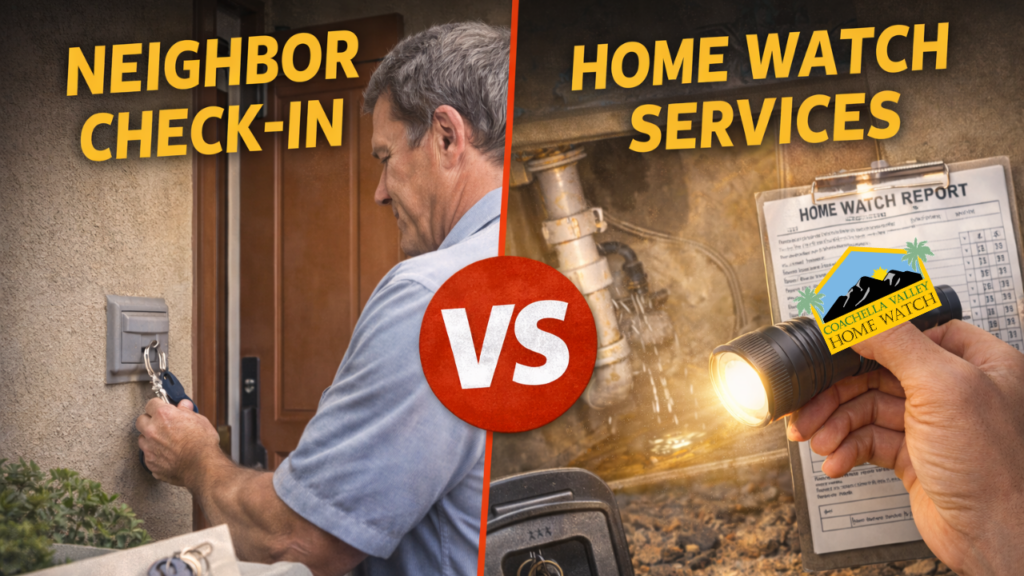
As a homeowner, asking a neighbor to keep an eye on your property feels like the simplest solution. It’s familiar, informal, and usually well-intentioned. Many seasonal and absentee homeowners rely on this approach for years without incident.

Until something goes wrong.

The reality is that while neighbor check-ins come from a good place, they’re rarely designed to protect a home in a consistent, professional way. And the gaps usually don’t become visible until damage has already occurred.

This isn’t about blaming neighbors. It’s about understanding the limits of casual oversight.


Good Intentions Don’t Equal Consistent Oversight

Most neighbors help when they can. But their availability changes.

They may:

  • travel unexpectedly
  • forget to stop by
  • only check the exterior
  • avoid entering the home
  • miss subtle changes

A quick glance from the sidewalk doesn’t reveal indoor temperature issues, plumbing leaks, HVAC problems, or pest activity. Consistency matters more than intention when it comes to protecting an empty home.

This is where structured home watch services differ.


Neighbors Aren’t Trained to Notice Early Warning Signs

Professional home watch is not about looking for disasters. It’s about noticing small changes.

A home watch professional is trained to spot:

  • unusual odors or humidity
  • early signs of leaks
  • HVAC behavior changes
  • irrigation irregularities
  • security or access issues

According to the Insurance Information Institute, many of the most expensive homeowner claims begin as small, undetected issues that worsen over time.

Neighbors are not expected to recognize these signals, and most don’t know what to look for.


No Documentation, No Accountability

One of the biggest gaps with neighbor check-ins is documentation.

If something happens:

  • there is no inspection report
  • no timestamped record
  • no baseline for comparison
  • no clear communication trail

Professional home watch services provide documented reports after each visit, creating accountability and a clear record of the home’s condition over time.

This documentation can also be critical when working with insurance providers or coordinating repairs.


Emergencies Require Authority, Not Availability

If a neighbor discovers a problem, they often don’t know what to do next.

They may hesitate to:

  • contact a plumber
  • authorize repairs
  • enter the home
  • make judgment calls

According to FEMA, delayed response during home-related incidents significantly increases damage severity and repair costs.

Home watch professionals operate with predefined authority, established vendor relationships, and clear escalation procedures.


Security and Liability Concerns Are Often Overlooked

Having a neighbor access your home introduces risk:

  • lost keys
  • shared codes
  • unclear responsibility
  • liability if something goes wrong

Professional home watch services use secure key management systems and operate under defined standards and insurance coverage.

This protects both the homeowner and the person entering the property.


Why Professional Oversight Makes the Difference

The difference isn’t care. Neighbors care.

The difference is:

  • consistency
  • training
  • documentation
  • authority
  • accountability

Professional home watch is not about replacing community. It’s about adding structure where structure matters.


A Stronger Way to Protect What Matters

Your home represents more than property value. It holds memories, plans, and peace of mind.

If you’re relying on casual check-ins and hoping nothing goes wrong, now is the time to rethink that approach.

👉 Schedule a professional home watch consultation today and know — not hope — that your home is protected.
👉 Visit https://coachellavalleyhomewatch.com/contact/ to get started.

Because peace of mind shouldn’t depend on availability. It should depend on oversight.