How Long Can a Home Sit Vacant Before Problems Start?
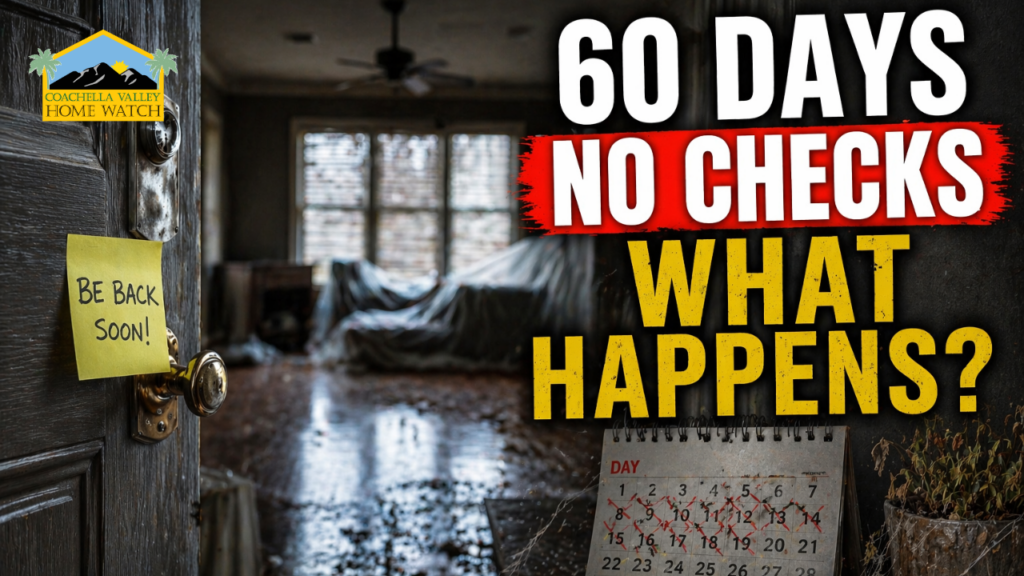
It’s one of the most common questions homeowners ask before leaving their property for an extended period:

“How long can my home sit empty before something starts to go wrong?”

The honest answer is simpler — and more concerning — than most people expect:

Problems don’t wait weeks or months.
They can start within days.


The First Few Days: Subtle Changes Begin

In the first few days of vacancy, nothing appears wrong.

But inside the home:

  • air circulation changes
  • humidity begins to shift
  • systems run without supervision

These are not visible issues — but they are the starting point.

According to the U.S. Environmental Protection Agency, indoor air conditions can change quickly when ventilation is reduced.


After 1–2 Weeks: Minor Issues Can Develop

This is when the first real risks begin to form.

Common early issues:

  • small plumbing leaks
  • irrigation misalignment
  • HVAC inefficiencies
  • pest exploration

These problems are still minor — but without anyone present, they go unnoticed.


After 30 Days: Problems Start Compounding

Once a home sits vacant for a month, small issues begin to grow.

A slow leak becomes:

  • cabinet damage
  • flooring damage
  • mold risk

An HVAC issue becomes:

  • humidity imbalance
  • system strain
  • higher failure risk

The Insurance Information Institute reports that many major home claims originate from small issues left undetected.


After 60 Days: Risk Increases Significantly

At this stage, the risk is no longer theoretical.

Common scenarios:

  • water damage spreads
  • pests settle in
  • systems begin failing
  • exterior damage worsens

Without intervention, what started as a small issue can now require thousands in repairs.

The Federal Emergency Management Agency emphasizes that early detection is key to reducing property damage.


Why Vacant Homes Are More Vulnerable

The issue isn’t just time — it’s lack of awareness.

In an occupied home:

  • you hear unusual sounds
  • you notice temperature changes
  • you see water or damage early

In a vacant home:

  • problems continue uninterrupted
  • systems operate without feedback
  • no one reacts to early warning signs

That’s what allows issues to escalate.


What Actually Prevents Problems

The key isn’t guessing how long a home is “safe.”

The key is making sure:

  • someone is checking the property regularly
  • systems are monitored
  • small issues are caught early

Professional home watch services provide structured, consistent oversight.

If you’re unsure how it works, this guide explains it clearly.

You can also review common questions here.


FAQ – Vacant Homes & Timing Risks

1. How long can a home sit vacant safely?

There is no guaranteed “safe” period — small issues can begin within days.

2. What is the biggest risk in a vacant home?

Undetected problems, especially water leaks and system failures.

3. Do problems really start that quickly?

Yes. Many issues begin subtly within the first 1–2 weeks.

4. Is 30 days too long to leave a home empty?

It depends on oversight — without monitoring, risk increases significantly.

5. Can cameras prevent these issues?

No. Cameras cannot detect most system or maintenance problems.

6. How often should a vacant home be checked?

Regular scheduled visits are recommended, especially beyond 1–2 weeks.

7. Does insurance require home checks?

Some policies include conditions for vacant homes, so monitoring is important.

If your home is going to sit empty for weeks — or even days — the question isn’t “Will something happen?”

It’s “Will anyone notice when it does?”

👉 Don’t wait until small issues turn into expensive damage
👉 Schedule professional home watch services today:
https://coachellavalleyhomewatch.com/contact/

Because the sooner a problem is noticed, the easier it is to fix.


How Small Home Issues Turn Into Expensive Repairs
Most homeowners don’t expect serious damage to happen overnight.

They expect something obvious.
A burst pipe. A system failure. A major event.

But in reality, the most expensive home repairs rarely start that way.

They start small.

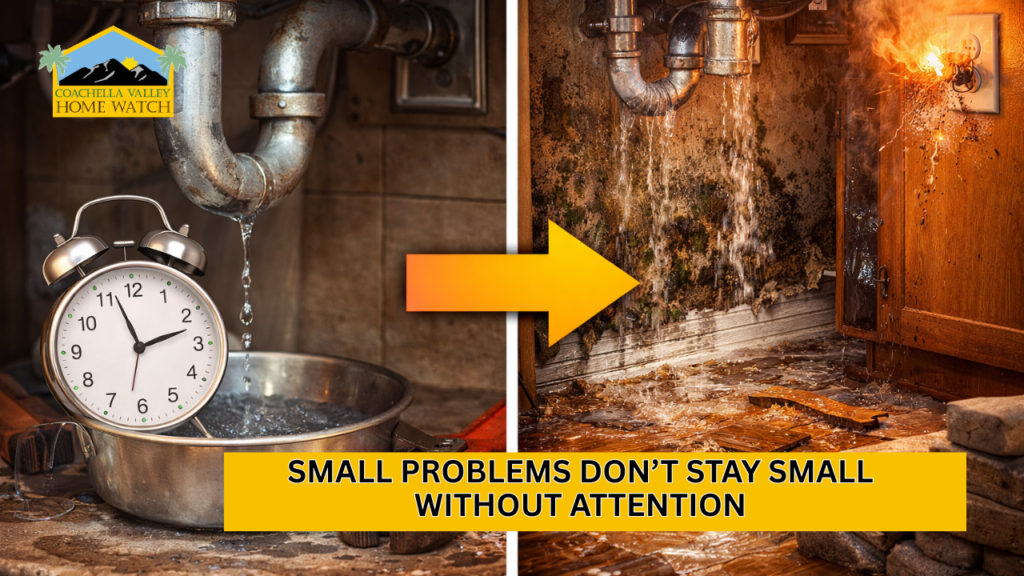
A slow drip under a sink.
A slightly misaligned sprinkler.
An HVAC system working just a little harder than usual.

On their own, these issues don’t seem urgent. But when they go unnoticed — especially in vacant or seasonal homes — they have time to grow into something much bigger.


Small Problems Don’t Stay Small Without Attention

In an occupied home, minor issues are usually caught early.

You hear a noise.
You notice moisture.
You see something that doesn’t look right.

But when a home is vacant, there’s no one there to notice those early signs.

According to the Insurance Information Institute, many of the most costly homeowner claims begin as small, undetected issues that worsen over time.

What could have been a quick fix becomes a major repair simply because it wasn’t seen in time.


Water Damage Is the Most Common Example

A small plumbing leak is one of the clearest examples of how damage escalates.

It often starts with:

  • a loose fitting
  • a worn seal
  • minor corrosion

Left unattended, that small leak can lead to:

  • soaked cabinetry
  • damaged flooring
  • mold growth
  • structural issues

The longer water is present, the more extensive the damage becomes.


Time Is What Turns Minor Issues Into Major Costs

The key factor isn’t severity — it’s time.

A problem that lasts:

  • 1 day → minor inconvenience
  • 1 week → noticeable damage
  • 1 month → expensive repair

According to Federal Emergency Management Agency, early detection and response significantly reduce the extent of property damage.

Vacant homes are especially vulnerable because issues can continue for long periods without interruption.


Systems Don’t Fail Suddenly — They Drift

Most home systems don’t break all at once.

They change gradually:

  • HVAC efficiency decreases
  • irrigation becomes misaligned
  • electrical systems show subtle warning signs

These changes are easy to ignore — until they lead to failure.

The U.S. Department of Energy notes that ongoing monitoring and maintenance are essential to prevent system breakdown and inefficiency.


Why Vacant Homes Are at Higher Risk

In vacant homes, there is no daily feedback loop.

No one notices:

  • sounds
  • smells
  • temperature changes
  • moisture buildup
  • subtle system behavior

That absence of awareness is what allows small issues to grow unchecked.

Professional home watch services provide structured walkthroughs to detect these changes early.

Understanding how home watch works can help homeowners see the difference between occasional checks and consistent oversight.

If you’re unsure what’s included, the FAQ page explains the process clearly.


Prevention Is Always Less Expensive Than Repair

The cost difference between early detection and delayed repair is significant.

A minor fix today can prevent:

  • thousands in repairs
  • insurance complications
  • long-term property damage

This isn’t about expecting something to go wrong.
It’s about making sure small issues don’t have time to become big ones.


FAQ – Small Issues vs Major Home Repairs

1. Do small home issues really lead to major damage?

Yes. Most serious home repairs start as minor problems that go unnoticed over time.

2. What is the most common cause of expensive home repairs?

Water damage from leaks is one of the leading causes.

3. How quickly can a small issue become serious?

In some cases, within days. Over weeks or months, damage can become significant.

4. Are vacant homes at higher risk?

Yes, because no one is present to notice early warning signs.

5. Can home watch services prevent damage?

They help detect problems early, which reduces the risk of major repairs.

6. Do cameras help prevent these issues?

Cameras provide visibility but cannot detect many system or maintenance problems.

7. What systems should be monitored regularly?

Plumbing, HVAC, irrigation, electrical, and overall home condition.


Strong Call to Action

The most expensive repairs usually don’t come from sudden disasters.
They come from small issues that were left unnoticed.

👉 Don’t wait until a minor problem becomes a major expense.
👉 Schedule professional home watch services today.

What Homeowners Forget to Check Before Leaving for the Season
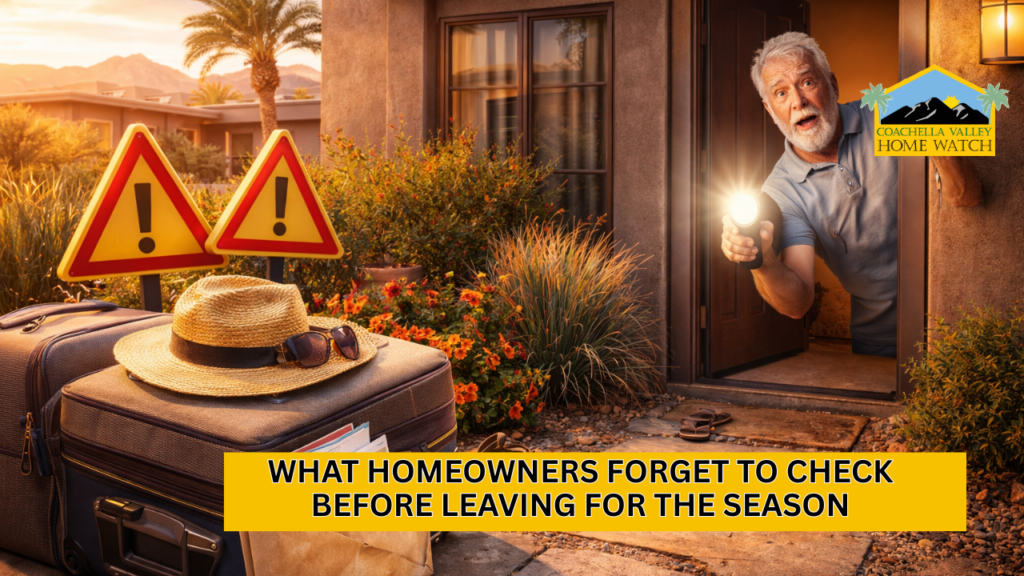
Preparing to leave your home for weeks or months usually involves the obvious steps. Lock the doors. Set the alarm. Adjust the thermostat. Maybe ask a neighbor to keep an eye on things.

But many homeowners forget that the biggest problems rarely come from what you planned for. They come from the small things that were overlooked before leaving.

Seasonal homes, second homes, and vacant properties require more preparation than most people realize. A missed detail before departure can turn into an expensive repair by the time you return.

Understanding what to check before leaving for the season can help prevent damage, stress, and unexpected costs.


Plumbing Is One of the Most Commonly Overlooked Risks

Water damage is one of the leading causes of homeowner insurance claims, and it often starts with small issues that go unnoticed.

Before leaving, homeowners should check:

  • supply lines under sinks
  • water heaters
  • outdoor faucets
  • irrigation connections
  • toilets and shut-off valves

Even a slow drip can cause significant damage if no one is there to notice it.

The Insurance Information Institute notes that undetected water leaks are among the most expensive types of home damage.

Regular monitoring helps ensure these problems are caught early.


HVAC Settings Should Be Verified, Not Assumed

Many homeowners adjust the thermostat before leaving and assume everything will stay stable.

However, incorrect settings can cause:

  • excessive humidity
  • system strain
  • frozen coils
  • overheating
  • high energy bills

The U.S. Department of Energy recommends proper seasonal settings and regular system checks to maintain efficiency and prevent damage.

If the system stops working while the home is vacant, the problem may go unnoticed for weeks.


Irrigation Systems Can Create Problems When No One Is Watching

Outdoor systems continue running even when the house is empty.

Common issues include:

  • broken sprinkler heads
  • overspray toward the house
  • timer malfunctions
  • leaking valves

In desert climates, irrigation problems can quickly affect landscaping, foundations, and exterior surfaces.

The Coachella Valley Water District recommends routine inspection of irrigation systems to prevent water waste and property damage.


Exterior Conditions Should Be Checked Before Leaving

Small exterior issues can become larger when the home sits unattended.

Homeowners should look for:

  • loose roof tiles
  • clogged drains
  • damaged screens
  • cracks near doors or windows
  • signs of pest activity

These problems are easier to fix before leaving than after months of vacancy.

Professional home watch services include full exterior walkthroughs as part of routine visits.


Security Isn’t Just Locks and Cameras

Many people believe that once the alarm is set, the home is protected.

But security also means knowing the property is being observed.

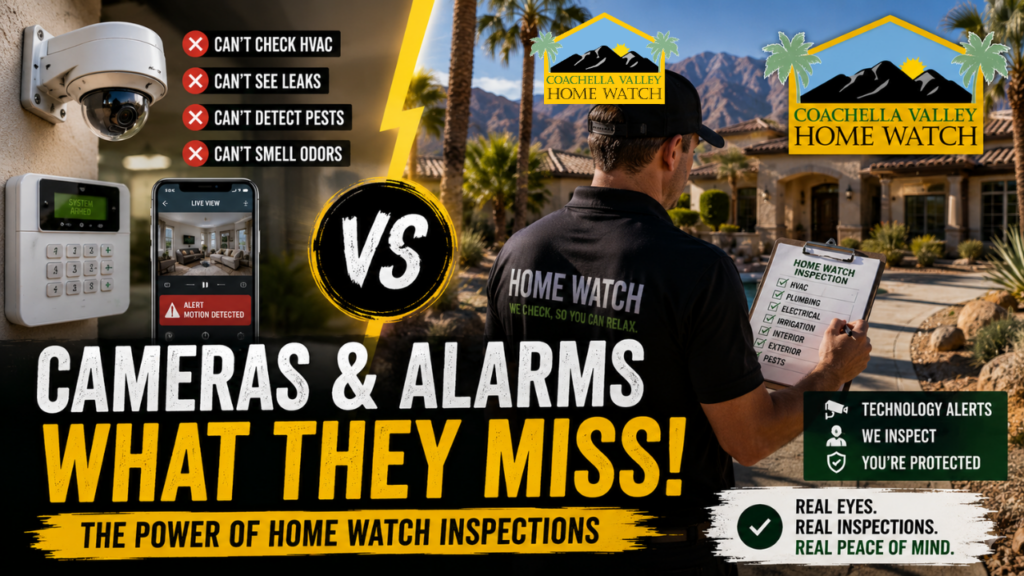
Cameras cannot detect:

  • moisture
  • odors
  • system noise
  • temperature changes
  • small leaks

That’s why structured home watch visits focus on full-condition checks, not just security monitoring.

If you’re unsure how home watch works, the FAQ page explains the process.


Preparation Before Leaving Prevents Problems Later

Most expensive repairs don’t happen suddenly.
They happen because something small was missed before the home was left unattended.

Taking the time to review systems, exterior condition, and property settings can make a major difference.

And when the home will be vacant for long periods, regular professional walkthroughs provide the extra layer of protection that preparation alone cannot.


FAQ – Preparing a Home Before Leaving for the Season

1. What should I check before leaving my home for a long time?

Plumbing, HVAC settings, irrigation, exterior condition, electrical systems, and security setup.

2. Should I turn off the water before leaving?

In many cases yes, but it depends on the property. Professional advice is recommended.

3. How often should a vacant home be inspected?

Regular scheduled visits are recommended for seasonal and second homes.

4. Can cameras replace home watch visits?

No. Cameras cannot detect many maintenance or system issues.

5. What happens if a problem occurs while I’m away?

Without oversight, damage may continue until the homeowner returns.

6. Do insurance companies care if the home is vacant?

Some policies have conditions related to vacancy and maintenance.

7. What does a home watch service check?

Interior, exterior, systems, signs of damage, and overall condition.


Leaving for the season should not mean worrying about what might go wrong while you’re gone.

The best protection starts before you leave — and continues while you’re away.

👉 Schedule professional home watch services today:
https://coachellavalleyhomewatch.com/contact/

Because the problems you forget to check are often the ones that cost the most.

The Small System Checks That Protect Homes Year-Round
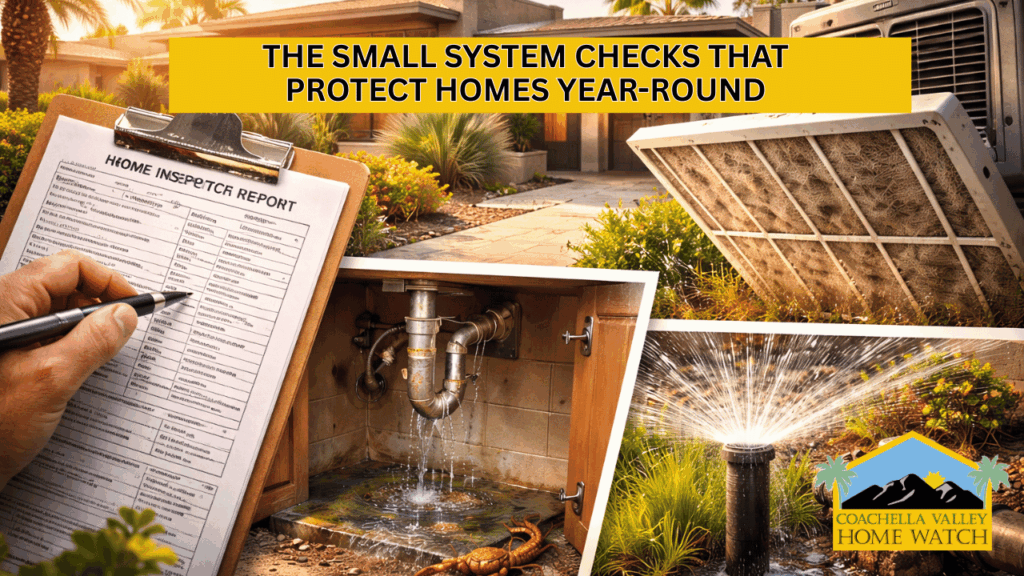
Many homeowners assume that major home problems appear suddenly. In reality, most expensive repairs begin with small system issues that go unnoticed for weeks or even months.

A slow plumbing drip.
An HVAC filter clogged with dust.
An irrigation line spraying water in the wrong direction.

None of these look urgent at first. But when systems operate without oversight, small inefficiencies often grow into costly problems.

That’s why consistent system checks play such an important role in protecting homes year-round.


HVAC Systems Need More Than Seasonal Attention

Heating and cooling systems work quietly in the background, which makes them easy to overlook.

Yet HVAC systems are one of the most common sources of unexpected home repairs. Dust buildup, clogged filters, blocked vents, and irregular cycling can reduce efficiency and place strain on components.

The U.S. Department of Energy notes that regular HVAC monitoring and maintenance can significantly improve system efficiency and lifespan.

Routine walkthroughs help identify early warning signs such as unusual airflow, system noise, or inconsistent temperatures before the problem escalates.


Plumbing Issues Rarely Start as Emergencies

Water damage is one of the most expensive issues homeowners face, but it almost never begins dramatically.

Most plumbing problems start small:

  • slow leaks under sinks
  • moisture around water heaters
  • minor drips at supply lines
  • condensation in utility areas

According to the Insurance Information Institute, undetected water damage is a leading cause of homeowner insurance claims.

Consistent checks allow these problems to be addressed early — before water spreads into cabinets, flooring, or walls.


Irrigation Systems Can Cause Hidden Damage

Outdoor irrigation systems run frequently in desert environments, especially in areas like the Coachella Valley.

Even a small irrigation issue can lead to:

  • foundation moisture problems
  • landscape flooding
  • water waste
  • damage to exterior surfaces

The Coachella Valley Water District encourages homeowners to monitor irrigation systems regularly to prevent water loss and property damage.

Routine property visits ensure irrigation systems are functioning correctly and not creating hidden issues around the home.


Electrical Panels and Power Systems Deserve Attention

Electrical panels are rarely inspected unless something stops working. However, small electrical issues often develop slowly.

During system checks, professionals may observe:

  • tripped breakers
  • overheating components
  • unusual electrical odors
  • damaged outlets or wiring

These early signals help prevent disruptions and reduce the risk of larger electrical problems.


Why System Awareness Matters

A home is a collection of systems working together. When one system begins to fail, it often affects others.

For example:

  • HVAC inefficiency increases humidity
  • plumbing leaks affect flooring and cabinets
  • irrigation overspray damages exterior structures

Professional home watch visits provide structured oversight that monitors these systems consistently.

Understanding what is included in professional home watch inspections can help homeowners make informed decisions about property protection.

If you have questions about how these visits work, the FAQ page provides helpful details.


Most expensive home repairs start with something small.

A drip.
A sound.
A system working slightly differently than before.

The sooner those changes are noticed, the easier they are to resolve.

👉 Protect your home with consistent professional oversight.
👉 Schedule home watch services today:
https://coachellavalleyhomewatch.com/contact/

Because the best way to prevent costly repairs is to notice the small things early.

The Hidden Risk: How a False Sense of Security Leaves Homes Vulnerable

The Hidden Risk: How a False Sense of Security Leaves Homes Vulnerable

Most homeowners don’t ignore risk intentionally. In fact, many feel confident that their home is protected.

The alarm system is set.
The cameras are online.
A neighbor is nearby.
Nothing has gone wrong before.

And that confidence — while understandable — is often where the real risk begins.

Because the most common threat to vacant and seasonal homes isn’t dramatic failure. It’s a false sense of security.


Security Tools Create Visibility — Not Oversight

Modern security systems are valuable tools. Cameras, alarms, and remote access apps provide visibility and alerts.

The Hidden Risk: How a False Sense of Security Leaves Homes Vulnerable

But visibility is not the same as awareness.

A camera shows what’s in frame. It doesn’t reveal:

  • slow plumbing leaks
  • HVAC strain
  • irrigation malfunctions
  • subtle humidity changes
  • small pest entry points

According to the Insurance Information Institute, many costly homeowner claims originate from small issues that go undetected for extended periods.

Most of these problems don’t trigger alarms. They develop quietly.


“Nothing Has Happened Before” Is Not a Strategy

Another common mindset is relying on past experience.

The Hidden Risk: How a False Sense of Security Leaves Homes Vulnerable

Homeowners often say:

  • “We’ve never had a problem.”
  • “The house has always been fine.”
  • “We’ve been doing it this way for years.”

But risk doesn’t operate on history — it operates on conditions.

Changes in weather, system age, vacancy duration, and simple wear all increase vulnerability over time. The U.S. Department of Energy notes that home systems naturally degrade and require monitoring, especially when occupancy patterns change.

Past stability does not guarantee future protection.


The Illusion of “Someone Is Keeping an Eye on It”

Many homeowners believe someone is loosely watching the property. But informal check-ins often lack:

  • structure
  • documentation
  • comparison over time
  • defined authority

Without consistency, subtle changes are easy to miss.

Professional home watch differs because it focuses on full-condition oversight — not just visual confirmation.


Why Small Issues Become Big Problems

Most home damage begins quietly:

  • a minor drip under a sink
  • an HVAC imbalance
  • irrigation overspray
  • a small roof vulnerability

Left unattended, these become:

  • water damage
  • mold
  • structural concerns
  • costly repairs

FEMA emphasizes that early detection significantly reduces property damage severity.

The longer a problem goes unnoticed, the more expensive it becomes.


Real Protection Requires Presence

True protection means someone is:

  • walking through the property
  • noticing changes
  • documenting conditions
  • escalating issues quickly

It’s not about expecting disaster. It’s about eliminating blind spots.

If you’re unsure what structured oversight includes, reviewing common questions can clarify the scope.

For homeowners who are away for extended periods, consistent professional visits provide measurable accountability.


If your confidence is based on “nothing has happened yet,” that may be the very thing placing your home at risk.

👉 Replace assumption with structured oversight.
👉 Schedule professional home watch services today at:
https://coachellavalleyhomewatch.com/contact/

Because peace of mind should be built on evidence — not hope.

Supporting Aging Parents from a Distance: How Senior Home Watch Services Provide Peace of Mind

If you are supporting aging parents from a distance, peace of mind should not depend on occasional visits or hopeful assumptions.

Caring for aging parents or loved ones is never simple. When you live in the same city, you can stop by, check in, and notice small changes. But when you live in another state — or across the country — the responsibility feels heavier.

You want to respect their independence.
You want them to feel safe.
And you want to know someone is paying attention.

That’s where senior home watch services play an important role.


The Challenge of Long-Distance Caregiving

Millions of adults today support aging parents from afar. According to the National Institute on Aging, distance caregiving adds unique stress because family members cannot easily observe day-to-day changes in living conditions or safety.

Small household issues can quietly become larger risks:

  • minor plumbing leaks
  • HVAC irregularities
  • tripping hazards
  • lighting problems
  • neglected exterior maintenance

These aren’t medical emergencies — but they can affect comfort, safety, and independence over time.


What Senior Home Watch Services Actually Do

Senior home watch is not medical care, and it is not assisted living. It is structured, professional property oversight tailored to homes occupied by older adults.

If you are supporting aging parents from a distance, peace of mind should not depend on occasional visits or hopeful assumptions.

Services often include:

  • scheduled home walkthroughs
  • system checks (HVAC, plumbing, electrical)
  • identifying safety concerns
  • monitoring for changes in home condition
  • reporting observations to designated family members

The focus is simple: notice small issues before they become serious.


Why Small Home Issues Matter More with Age

As mobility decreases, minor home issues carry greater impact. The Centers for Disease Control and Prevention reports that falls are one of the leading causes of injury among older adults.

Something as small as:

  • uneven flooring
  • poor lighting
  • water near a sink
  • malfunctioning door hardware

can increase risk significantly.

Senior home watch helps reduce preventable environmental hazards through consistent observation and communication.


Respecting Independence While Providing Oversight

One of the most delicate aspects of aging support is maintaining dignity.

If you are supporting aging parents from a distance, peace of mind should not depend on occasional visits or hopeful assumptions.

Senior home watch does not interfere with daily routines. It does not replace family. It provides structured, respectful property oversight that supports independence rather than limiting it.

For families who already rely on general home watch services for seasonal properties, this specialized oversight simply extends that same professionalism to a different life stage.

If you’re unfamiliar with what professional home watch typically includes, reviewing common questions can help clarify expectations.


Communication Creates Confidence

One of the greatest stressors for long-distance caregivers is uncertainty.

Is the house functioning properly?
Is everything being maintained?
Would someone notice if something changed?

Professional senior home watch services provide documentation and regular updates so family members are informed without feeling intrusive.

For families living far away, that clarity can make an enormous emotional difference.


A Proactive Approach to Aging in Place

Many older adults prefer to age in place rather than relocate. The AARP notes that most seniors wish to remain in their homes as long as possible.

Supporting that choice requires more than good intentions. It requires consistent oversight of the environment itself.

Senior home watch bridges the gap between independence and protection.


If you are supporting aging parents from a distance, peace of mind should not depend on occasional visits or hopeful assumptions.

👉 Protect their home — and your peace of mind — with structured, professional oversight.
👉 Schedule a consultation today HERE.

Because caring from afar should feel supportive — not uncertain.

Why Seeing Your Home on a Camera Isn’t the Same as Knowing Its Condition

Security cameras have become a common tool for homeowners, especially those who travel frequently or own seasonal properties. Being able to open an app and see inside your home can feel reassuring. You see the living room. The hallway looks quiet. Nothing appears out of place.

But visibility is not the same as awareness.

While cameras are useful, they only show a narrow slice of what’s happening inside a home. And many of the most expensive home issues don’t happen where cameras are pointed — or in ways that are visible on a screen.


Cameras Show Images, Not Conditions

A camera can show you that a room looks normal. What it can’t tell you is how that room feels.

It can’t detect:

  • stale or heavy air
  • subtle humidity changes
  • temperature imbalances
  • unusual odors
  • vibration or system noise

According to the U.S. Environmental Protection Agency, indoor air quality and ventilation issues often develop without visible signs, especially in homes with limited airflow.

These are the kinds of changes that are noticed by walking into a space — not by viewing it remotely.


Most Problems Start Outside the Camera’s View

Cameras are typically installed in obvious areas: entryways, living rooms, garages. But many common home issues begin elsewhere.

For example:

  • slow leaks under sinks or behind toilets
  • moisture near water heaters
  • HVAC strain in utility areas
  • irrigation issues outside the home
  • pests in closets, attics, or storage spaces

Seeing a clean living room doesn’t tell you what’s happening behind walls, under cabinets, or outside the frame.

This is one reason professional home watch inspections focus on full walkthroughs, not just visual confirmation.


Cameras Don’t Provide Context Over Time

A single image can’t tell you if something has changed.

Professional home watch relies on comparison:

  • how the home felt last visit vs. this visit
  • whether systems are behaving differently
  • whether small issues are repeating or escalating

Without that context, it’s easy to miss gradual shifts that lead to larger problems.

According to the Insurance Information Institute, many major homeowner claims begin as small, undetected issues that worsen over time.


Alerts Don’t Equal Action

Even when a camera alerts you to motion or an issue, it doesn’t solve the problem.

If you receive an alert about:

  • water on the floor
  • an unexpected open door
  • a system malfunction

you still need someone physically present to assess the situation, shut off water, secure access, or coordinate repairs.

Home watch services bridge that gap by combining observation with action and documentation.


Cameras Are a Tool — Not a Strategy

Cameras work best as part of a broader protection plan. On their own, they offer limited insight.

Knowing your home’s condition means understanding:

  • how systems are functioning
  • whether the environment is stable
  • if small changes are developing
  • what’s happening beyond what’s visible

If you’re unsure what professional oversight actually includes, reviewing common questions can help clarify expectations.


If your peace of mind depends on what you can see through a camera lens, you’re only getting part of the picture.

👉 Know what’s happening in your home — not just what it looks like.
👉 Schedule professional home watch services today at:
https://coachellavalleyhomewatch.com/contact/

Because seeing your home is easy.
Knowing its condition is what truly protects it.

The First 30 Days Away: What Usually Changes Inside a Home

When homeowners leave for an extended trip, many assume that meaningful changes only happen after months of absence. In reality, the first 30 days away are often when the most important shifts begin — quietly, subtly, and without obvious warning signs.

These changes rarely look like emergencies. Instead, they show up as small deviations from normal conditions that, if unnoticed, can compound over time.

Here’s what typically changes inside a home during the first month away.


Indoor Air Begins to Stagnate

Once daily activity stops, airflow inside the home changes almost immediately. Doors stay closed, rooms remain unused, and natural circulation slows.

Within the first few weeks, this can lead to:

  • stale or heavy-feeling air
  • uneven temperatures between rooms
  • humidity pockets in bathrooms or closets

The U.S. Environmental Protection Agency notes that limited ventilation can affect indoor air quality even in dry climates.

These shifts are often felt before they’re seen — a key reason walkthroughs matter early in an absence.


Plumbing Systems Sit Idle

In the first 30 days, plumbing transitions from regular use to near dormancy. Toilets, sinks, and drains that aren’t used regularly lose the “self-check” that daily activity provides.

During this period, it’s common to see:

  • slow leaks go unnoticed
  • seals begin to dry out
  • small moisture issues develop quietly

This is one of the most frequent findings during professional home watch visits.


HVAC Systems Begin Operating Differently

Even when a home is set to a baseline temperature, HVAC systems respond differently once occupancy stops.

Within the first month:

  • systems cycle less predictably
  • airflow imbalances become more noticeable
  • filters collect dust without anyone noticing changes

According to the U.S. Department of Energy, HVAC performance issues often appear gradually and benefit from early monitoring.


Humidity and Temperature Drift

Without human activity, homes lose natural balance. One room may stay cooler, another warmer. Humidity can linger longer in certain areas, especially in closed spaces.

These aren’t dramatic changes — but they’re meaningful ones, and they often begin within the first few weeks of vacancy.


Early Signs of Pest Interest

Quiet homes attract attention faster than many homeowners expect. During the first 30 days, pests may begin exploring entry points, even if they haven’t moved in yet.

Early signs are subtle and easy to miss without routine checks.


Why the First 30 Days Matter Most

The first month away sets the baseline for everything that follows. Small changes establish patterns. Left unchecked, those patterns become problems.

Professional home watch focuses on this early window — not because something is likely to go wrong immediately, but because this is when prevention is most effective.

If you’re unsure what ongoing oversight includes, reviewing common questions can help clarify expectations.


If you’re leaving your home unattended — even for a few weeks — the first 30 days are not the time to rely on assumptions.

👉 Protect your home before small changes become expensive problems.
👉 Schedule professional home watch services today at:
https://coachellavalleyhomewatch.com/contact/

Because peace of mind doesn’t start months later. It starts from day one.

Why Vacation Home Monitoring in Palm Desert is a Smart Investment

Why Vacation Home Monitoring in Palm Desert is a Smart Investment

Owning a vacation home in Palm Desert is a dream come true—but it also comes with the responsibility of ensuring your property stays secure, well-maintained, and ready for your next visit. With the unique challenges of desert climates and seasonal occupancy, vacation home monitoring isn’t just a luxury; it’s a smart investment that protects your asset and provides peace of mind.


The Importance of Vacation Home Monitoring

Protecting Your Investment

Vacation homes, whether used as second homes or rental properties, face risks like weather-related wear, unexpected maintenance issues, and even vandalism. Regular monitoring helps catch small problems before they turn into costly repairs. For example, detecting a minor plumbing leak early can prevent extensive water damage—a scenario that has saved many homeowners thousands of dollars in repair costs. According to data from the Insurance Information Institute, properties with routine inspections tend to report fewer expensive claims​.

Preventing Vandalism and Theft

Unoccupied properties can become targets for vandalism and theft. A dedicated home watch service keeps an eye on your property with scheduled visits and sometimes even real-time alerts, deterring criminals from seeing an easy target. This proactive approach not only protects your belongings but also preserves the overall value of your home.

Maintaining Property Value

Consistent monitoring ensures that your property remains in top condition. By addressing issues immediately, you maintain both the aesthetic appeal and the structural integrity of your home, which is crucial for long-term value—especially in a competitive market like Palm Desert.


Key Benefits of Vacation Home Monitoring in Palm Desert

Early Detection of Maintenance Issues

Routine inspections mean that any signs of wear or potential hazards are identified and remedied before they escalate. Whether it’s a faulty air conditioning unit under the harsh desert sun or minor roof damage from seasonal storms, early detection is key.

24/7 Peace of Mind

Knowing that your property is being regularly checked—even when you’re miles away—allows you to relax. This round-the-clock reassurance is particularly valuable for vacation home owners who may not be in the area year-round.

Enhanced Security Measures

Modern home watch services utilize advanced security technology, such as surveillance cameras and smart sensors, that can instantly alert you and emergency services if something is amiss. This not only prevents property damage but also enhances overall safety.

Cost Savings Over Time

Investing in regular monitoring can lead to significant long-term savings. By preventing small issues from developing into major problems, you can avoid unexpected repair costs. Additionally, many insurance providers offer discounts to homeowners who take proactive measures in protecting their property.


Real-World Success Stories and Expert Insights

Real-World Success Stories and Expert Insights

Consider the story of one Palm Desert homeowner who discovered early signs of roof damage during a routine check. Thanks to prompt repairs, the homeowner avoided severe water damage during the subsequent rain season—a scenario that could have resulted in thousands of dollars in repairs. John Martinez, a local property manager with over 20 years of experience, notes, “Regular monitoring is not just about security; it’s about preserving your home’s value by catching issues before they escalate.” His experience underscores the tangible benefits of having a trusted home watch service in place​.

Industry experts agree that a well-maintained property not only retains value but also attracts higher-quality renters if you decide to lease your vacation home. These proactive measures translate into both financial savings and enhanced property appeal over time.


How Coachella Valley Home Watch Sets the Standard

Local Expertise and Tailored Services

Coachella Valley Home Watch is deeply rooted in the local Palm Desert community. Their knowledge of regional challenges—such as the extreme desert heat and seasonal fluctuations—allows them to provide customized monitoring solutions. They understand that every home is unique, so their services are tailored to meet individual needs, ensuring that no detail is overlooked.

Advanced Monitoring Technology

Embracing state-of-the-art technology, Coachella Valley Home Watch employs a combination of scheduled inspections, remote surveillance, and smart alerts to keep your property secure. This integrated approach not only enhances efficiency but also allows for immediate action when potential issues are identified.

Proven Track Record

With years of experience and numerous satisfied clients, Coachella Valley Home Watch has established itself as a trusted authority in vacation home monitoring. Their commitment to quality service and rapid response times has earned them a reputation as the go-to provider in the Coachella Valley region.


Frequently Asked Questions (FAQ)

How often are inspections performed?

Q: How often are inspections performed?
A: Most services offer scheduled inspections on a weekly or bi-weekly basis, with additional checks during extreme weather events or after long periods of vacancy.

Q: What happens if an issue is detected?
A: When a problem is identified, you’ll receive an immediate alert along with a detailed report and recommendations for repair. This allows you to address the issue promptly before it escalates.

Q: How much does vacation home monitoring cost?
A: Pricing can vary depending on the size of the property, the frequency of inspections, and additional services required. However, many homeowners find that the long-term savings in repair costs and insurance premiums make it a worthwhile investment.

Q: Can monitoring services help with insurance claims?
A: Yes, documented inspections and maintenance reports can provide valuable evidence during insurance claims, helping to expedite the process and ensure fair compensation.


Conclusion

Investing in vacation home monitoring in Palm Desert is not only about security—it’s a proactive strategy to safeguard your investment, reduce long-term costs, and ensure that your property remains a welcoming haven when you return. With tailored services, advanced technology, and a deep understanding of local conditions, Coachella Valley Home Watch stands out as a trusted partner for homeowners.

If you’re ready to protect your Palm Desert vacation home and gain peace of mind, reach out to Coachella Valley Home Watch today for a free consultation: 760-205-2072. Let their expertise work for you so you can enjoy your getaway knowing your home is in safe hands.


Have questions or want to share your own experience? Leave a comment below or share this article with fellow homeowners. Your home deserves the best care—invest smartly and live worry-free.

Why is my Alarm Going Off?

Why is my Alarm Going Off?

When you’re miles away from your Coachella Valley home, an unexpected alarm or emergency can send your stress levels skyrocketing. That’s why professional home watch services are essential—not just to monitor your property, but to act immediately and effectively when something goes wrong.

At Coachella Valley Home Watch, we specialize in protecting second homes, vacation properties, and seasonal residences. Below, we’re breaking down how we handle alarms and emergencies to give you peace of mind, backed by real-world experience, expert insights, and proven procedures.


Why Immediate Response Matters in the Desert

With average summer temperatures topping 108°F in the Coachella Valley, emergencies like HVAC failures, water leaks, or security breaches can escalate quickly. According to the U.S. Department of Energy, water damage costs homeowners an average of $3,000-$5,000 per incident if not addressed promptly.

Real-World Example:

One of our clients received a water sensor alert while traveling overseas. We responded within 30 minutes, shut off the main water supply, and coordinated emergency plumbing repairs—saving the property from extensive flood damage.


Our Step-by-Step Emergency Response Process

1. 24/7 Alarm Monitoring and Alerts

We integrate with your home’s existing security systems, including providers like ADT, Ring, and SimpliSafe, to receive real-time alerts for:

  • Break-ins
  • Fire and smoke
  • Water leaks
  • HVAC failure

2. Rapid On-Site Verification

Our Step-by-Step Emergency Response Process

Upon an alert, a certified home watch professional is dispatched immediately to assess the situation. Unlike relying on a neighbor or friend, our trained staff follow a strict protocol to ensure safety and accurate reporting.

Expert Insight:
“In an emergency, visual verification is critical. False alarms waste resources, but ignoring a real threat can be devastating.”
Louis Moreto, Co-Owner of Coachella Valley Home Watch and Retired Chief of Police

3. Coordination with Emergency Services

If the situation requires police, fire, or medical intervention, we liaise directly with authorities to provide property access and details.

4. Damage Mitigation

Our team takes immediate steps to minimize damage, whether that means turning off utilities, securing entry points, or starting basic remediation until professional services arrive.

5. Detailed Reporting and Follow-Up

After resolution, we provide a full incident report with photos, timestamps, and next steps so you’re always informed—even if you’re thousands of miles away.


Common Emergency Scenarios We Manage

🏠 HVAC Failures

Common Emergency Scenarios We Manage

In the Coachella Valley heat, a broken AC can quickly lead to interior damage, especially to sensitive materials like hardwood flooring and electronics. We ensure quick HVAC service coordination to keep your home safe.

🚰 Water Intrusion

From monsoon storms to leaking appliances, water can cause major structural issues. We routinely check for early signs of leaks and are prepared to act fast when sensors trigger.

🔒 Security Breaches

Break-ins and vandalism can occur when homes appear vacant. We deter potential criminals with regular visits and respond immediately to any security breach alerts.


FAQ: How Do Home Watch Services Handle Emergencies?

What happens if my alarm goes off and I’m out of town?

Answer: Coachella Valley Home Watch receives the alert, dispatches a professional to your home, verifies the situation, and coordinates with emergency responders if necessary.

How quickly can you respond to an emergency?

Answer: Our average on-site response time in the Coachella Valley is under one hour, depending on your location and the nature of the emergency.

Do you work with my existing security system?

Answer: Yes! We seamlessly integrate with most major security providers to ensure we’re notified immediately of any issues.


Why Trust Coachella Valley Home Watch?

We are accredited members of the National Home Watch Association (NHWA), which holds us to the highest standards of service, ethics, and accountability. Every home watch professional on our team is background checked, insured, and trained in emergency response protocols.

Data-Backed Assurance

  • $5,000+ average damage avoided per timely water leak response.
  • 30-60 minutes average emergency response time.
  • 365 days/year availability, including holidays.

Proactive Tips for Homeowners

✔️ Install smart water sensors and smoke detectors.
✔️ Maintain your HVAC system to avoid mid-summer breakdowns.
✔️ Secure all entry points before leaving for extended periods.
✔️ Schedule regular home watch visits to catch issues before they become emergencies.


Ready to Protect Your Home—No Matter Where You Are?

At Coachella Valley Home Watch, we don’t just monitor your property—we actively safeguard your investment with proven emergency response protocols tailored for the unique desert climate.

👉 Contact us today to schedule a consultation or learn more about how we protect your home when you can’t.