
Smoke alarm chirping while away? If you own a seasonal or second home in the Coachella Valley, that’s one phone call you never want to receive. A steady chirp every 30–60 seconds may be something as simple as a low battery, but when your desert home is vacant, it’s important to determine what’s happening rather than assume everything is okay.
Desert heat, fine dust, aging detectors, and long periods of vacancy can all contribute to smoke alarm issues. When you’re hundreds of miles away, knowing whether you’re dealing with routine maintenance or a potential emergency becomes especially important. If you discover a smoke alarm chirping while away, desert heat, battery condition, dust, and the age of the detector are all possible factors to consider. When you discover a smoke alarm chirping while away, desert heat, dust, battery condition, and detector age are all factors worth considering.
Below is a practical guide to what to do when your desert home’s smoke alarm chirps while you’re away—and how a professional home watch service like Coachella Valley Home Watch can help you handle it quickly and safely.
Smoke Alarm Chirping While Away? What Coachella Valley Homeowners Should Do
If someone reports a smoke alarm chirping while away, your first priority should be determining whether you’re hearing a maintenance chirp or an actual alarm
1) Why smoke alarms chirp more often in desert homes
A chirp is typically the device telling you it needs attention. In our local climate, a few factors make that more common:
Heat stress on batteries and electronics
Even with air conditioning, a closed home can experience temperature swings—especially in garages, hallways near attics, or rooms that don’t cool evenly. Heat can shorten battery life and increase nuisance alerts.
Dust and fine desert particles
Desert dust can work its way into the sensing chamber of a smoke detector. Over time, that can cause false alarms or warning chirps, especially if the unit is older.
Long periods without anyone noticing early signs
If you’re living in the home full-time, you might catch the first chirp and swap a battery the same day. If the home is vacant, it can chirp for days, upsetting neighbors and leaving you unsure whether it’s a simple battery issue or something more urgent.
Aging detectors
Many smoke alarms have a 10-year lifespan (some are sealed 10-year battery units; others require battery changes but still expire). An “end-of-life” chirp is common in older units and won’t be fixed by a new battery.
2) First steps when you hear about chirping (before anyone goes inside)
When you’re away, your goal is to confirm what’s happening and avoid sending someone into a potentially unsafe situation.
Step 1: Ask for the exact sound and location
If a neighbor, HOA, or guest reports it, ask:
– Is it a single chirp every 30–60 seconds, or a continuous loud alarm?
– Is it coming from inside the home, a garage, or a patio area?
– Do they smell smoke or see any haze through windows?
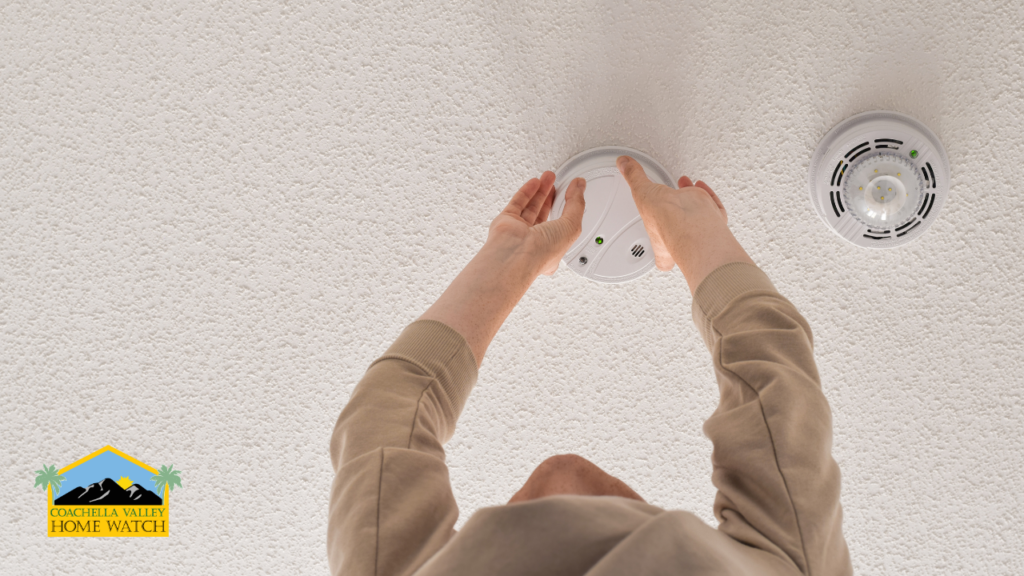
A single periodic chirp usually points to battery/end-of-life. A continuous alarm could indicate smoke, heat, or carbon monoxide (CO), depending on the device.
Step 2: Check your smart devices (if you have them)
If you have a monitored alarm system, smart smoke/CO detectors, or cameras (pointed at legal/common areas), look for:
– Alarm notifications in the app
– Power/internet status (a power outage can trigger beeps on some systems)
– Any signs of water leaks or HVAC issues that could create humidity or dust movement
Step 3: Decide whether this is “call 911” or “send a home watch visit”
Call emergency services immediately if:
– Anyone reports smoke, burning smell, or visible haze
– The alarm is continuous, and you can’t confirm it’s a low-battery chirp
– You suspect a CO alarm (especially if the home has gas appliances)
If it’s clearly a periodic chirp with no other warning signs, the next best step is a trusted, insured professional visit—especially if you’re not nearby.
3) How to tell battery chirp vs. smoke alarm vs. CO alarm (from afar)
You can’t diagnose perfectly from a distance, but you can narrow it down.
Battery or end-of-life chirp (most common)
– Single chirp at regular intervals
– No other signs (no smoke smell, no visible issue)
– Often starts after a temperature swing or after the home has been closed up
Smoke alarm event
– Loud, repeating alarm pattern (not a single chirp)
– May be triggered by actual smoke, dust, or a failing unit
– If it’s a monitored system, you may receive an alarm event notification
Carbon monoxide (CO) alarm event
– Many combo units have a distinct pattern for CO vs. smoke
– CO is odorless; you cannot rely on “no smell” as reassurance
– If there’s any chance it’s a CO alarm, and the home has gas, treat it as urgent
If you don’t know which it is, default to safety: don’t ask a neighbor to enter, and don’t ignore it.
4) What a professional home watch visit should do on-site
A chirping alarm is a perfect example of why home watch isn’t just “a quick look around.” The right response is systematic, documented, and safety-first.
At Coachella Valley Home Watch, an on-site visit for a chirping alarm should focus on:
Confirming the device type and location
– Smoke-only, CO-only, or combo unit
– Hardwired with battery backup vs. battery-only
– Whether multiple units are chirping (sometimes one failing unit triggers confusion)
Checking for immediate hazards
Before anyone starts pressing buttons or swapping batteries, the priority is to confirm there are no signs of:
– Smoke, scorching, or unusual heat near appliances
– Electrical issues (burning smell near panels/outlets)
– Gas odor (if applicable)
– Water intrusion that could affect electrical devices
If any hazard is suspected, the correct step is to stop and escalate to emergency services or the appropriate licensed professional.
Silencing and troubleshooting properly
Depending on the device:
– Use the hush/test button to silence nuisance alarms (when safe)
– Replace batteries if it’s a replaceable-battery unit
– Identify end-of-life chirps (often indicated by a specific chirp pattern or an indicator light)
Important note for absentee owners: if a unit is hardwired and chirping, it may still be a battery backup issue—but it can also indicate wiring/power problems. That’s not something to guess at.
Documenting what was found
A professional home watch report should include:
– Which device was chirping and where
– What action was taken (battery replaced, unit reset, unit flagged for replacement)
– Whether additional devices appear expired or mismatched
– Photos where appropriate
Coordinating next steps if replacement is needed
If the detector is expired or failing, the next step is usually replacement with the correct type for the location. Many owners also prefer matching models throughout the home for consistent behavior and easier maintenance.
Home watch can coordinate access for a qualified handyman or electrician if needed, and confirm the issue is resolved after the work is completed.
The best way to reduce the chance of a smoke alarm chirping while away is to inspect your detectors before leaving the Coachella Valley for the season.
5) Seasonal prevention: what to do before you leave the Coachella Valley
The best time to deal with smoke/CO detectors is before you lock the door and head out of town—especially heading into hotter months when battery and device issues spike.
Here’s a practical checklist:
Replace batteries on a schedule (don’t wait for chirps)
If your detectors use replaceable batteries, set a predictable schedule. Many owners do this before seasonal departure so they’re not dealing with it remotely.
Check the manufacture/expiration date
Most detectors are designed to be replaced around the 10-year mark. If you’re not sure, look at the back of the unit for the date. If it’s near end-of-life, replacement is usually the smarter move than repeated troubleshooting.
Test each unit and confirm it’s audible
Press the test button and confirm you can hear it in sleeping areas and common spaces. In larger desert homes, you may need additional units or interconnected alarms.
Consider combo smoke/CO units where appropriate
If your home has gas appliances, an attached garage, or other CO risk factors, make sure CO detection is properly installed. (Placement matters—follow manufacturer guidance and local code requirements.)
Keep a simple “device map” for your home watch provider
A short note like “Smoke/CO combo in hallway outside primary bedroom; smoke-only in laundry room; hardwired units in main hall” saves time when something happens.
Add home watch checks to your seasonal plan
A smoke alarm chirping while away is a perfect example of where an in-person Home Watch visit can provide information that cameras and remote monitoring cannot
When you’re away for weeks or months, routine home watch visits can catch early warning chirps, power issues, and other small problems before they become urgent calls from neighbors or HOA.
When a smoke alarm chirps in a vacant home, it’s easy to feel stuck—especially if you’re trying to coordinate a neighbor, a handyman, and a security company from another state. The goal is to respond quickly, confirm safety, and document the fix so it doesn’t repeat.
If you’re dealing with a smoke alarm chirping while away, Coachella Valley Home Watch can provide local, in-person support to help verify what’s happening and coordinate the appropriate next step.
Coachella Valley Home Watch serves seasonal, absentee, and second-home owners throughout Palm Springs, Cathedral City, Rancho Mirage, Palm Desert, Indian Wells, La Quinta, Indio, Desert Hot Springs, and Bermuda Dunes. If you get that “chirping alarm” call while you’re away, we can be your local eyes and ears to verify what’s happening and help coordinate the right next step.
If your desert home’s smoke or CO alarm is chirping while you’re away, contact Coachella Valley Home Watch to schedule a prompt check. We’ll verify what’s happening, document findings, and help coordinate the safest next step. (760) 205-2072